 Benin: How Mireille Gloria Foumilayo Odounfa uses Artificial Intelligence to support smallholder farmers
When survival becomes work: the untold economic role of displaced women in Africa
Africa doesn’t have a youth unemployment problem, but a Human Infrastructure problem
Ghana: Aline Mwintome Naawa empowers women farmers to address climate change-related disaster risks
Benin: How Mireille Gloria Foumilayo Odounfa uses Artificial Intelligence to support smallholder farmers
When survival becomes work: the untold economic role of displaced women in Africa
Africa doesn’t have a youth unemployment problem, but a Human Infrastructure problem
Ghana: Aline Mwintome Naawa empowers women farmers to address climate change-related disaster risks
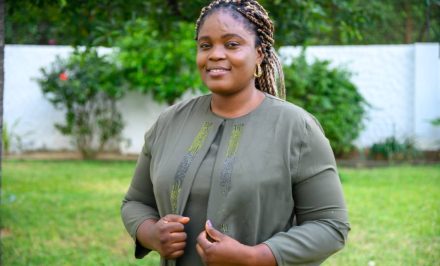
A researcher specialising in remote sensing and ecosystem management, Tété Pérugine Akoton develops science-based approaches for the monitoring, conservation and restoration of coastal ecosystems, particularly the mangroves along the Benin coastline. She is also committed to promoting women’s leadership.
It was during an educational trip organized by the University of Abomey-Calavi that Tété Pérugine Akoton first discovered mangrove forests. Fascinated by their ecological richness and aware of their vulnerability, she decided to make them the central focus of her career.
After completing a Bachelor’s degree in Geography at the University of Abomey-Calavi, she went on to study for a Master’s degree in Computational Biodiversity, a course that enabled her to combine ecology, spatial data and technology. She would later, in 2025, go on to obtain her PhD in Agricultural Science, specialising in Remote Sensing and Environmental Management, at the Faculty of Agricultural Sciences at the University of Parakou (Benin).
“My work involves linking science, geospatial technologies and socio-economic realities in order to offer decision-makers concrete solutions for the preservation of these ecosystems,” she explains to Africa Women Experts.
Using satellite imagery, drone footage and Geographic Information Systems (GIS), the researcher is able to accurately track changes in the mangroves over time.
“These tools enable us to identify degraded areas, analyze changes along Benin’s coastline, measure the human pressures on these ecosystems and inform decision-making,” she explains.
Her doctoral research to date has resulted in several scientific publications on mangrove conservation.
Beyond research: a commitment to local communities
For Tété Pérugine Akoton, mangrove conservation is not confined to the laboratory. Convinced that conservation also depends on local communities, she is actively involved with the NGO ‘Secours à la Nature / Rescue for Nature’, where she carries out fieldwork and helps to make her scientific research accessible to the general public and raise awareness amongst local communities.
Indeed, many local communities living along the coastline depend directly on the resources provided by mangroves. “This dependence exacerbates the depletion of coastal natural resources, further undermining the local communities that rely on them for their livelihoods …”, she explains.
However, human activities are leading to the disappearance of mangrove forests, exacerbating the climate crisis. Indeed, these ecosystems possess an exceptional capacity for carbon storage and play a major role in protecting coastlines.
Together with her team, she runs awareness-raising campaigns and organizes discussions with local communities on the ecological importance of mangroves and the consequences of their degradation.
She also develops environmental education initiatives for young people. The NGO in which she works as the Wetlands and Coastal Natural Resources Officer is also involved in restoring degraded mangrove areas through reforestation projects. “We are seeing the communities really taking ownership of these initiatives. When they are involved from the outset, the plantations are better protected and the results are more sustainable. We hope that this commitment will have a positive impact on future generations,” she says.
Women: Key Players in Mangrove Restoration
At the heart of her commitment, Pérugine positions women as key players in mangrove conservation. In 2023, the NGO launched the Gender Inclusion Project for Mangrove Restoration (PIGREM), an initiative that combines mangrove conservation, women’s economic empowerment and adaptation to climate change.
“Women living around mangroves are among the first to suffer from their degradation. But they are also best placed to contribute to their restoration,” she emphasizes.
The program positions women as pioneers throughout the entire restoration cycle. They receive support in developing income-generating activities, as well as cooperatives. They are also made aware of the harmful effects of certain practices and supported in adopting more sustainable solutions.
Inspired by her research, this project earned her an ARES grant, which enabled her to undertake a four-month capacity-building placement in Belgium aimed at ecosystem managers.
Promoting women’s leadership in science
In addition to her commitment to protecting the environment, she also advocates for women to play a greater role in scientific research.
She is a co-founder of the « Women Feel Free in Sciences » initiative, a platform that aims to encourage young girls to pursue careers in science and research.
“Many women have real scientific potential, but lack guidance, visibility or female role models who can inspire them,” she observes.
Drawing on her own experience, which has included mentoring and securing scholarships, she hopes to create a space where young female scientists can benefit from guidance, advice and support. Although still in its early stages, the initiative has already raised awareness among many girls about leadership, science education and self-confidence, and has encouraged several to continue their studies.
A vision for Africa
Despite challenges relating to research funding, Tété Pérugine Akoton has continued her work thanks to several grants, including the RIGRA IDRC Canada grant, the UNESCO MAB grant for young researchers and the Mawazo grant.
Today, her ambition is to expand her research on mangroves in Benin and across Africa, contribute to the development of environmental policies based on scientific research, whilst becoming an inspirational role model for a new generation of female scientists committed to protecting the environment.
DFE






 Menu
Menu