 Benin: Tété Pérugine Akoton, committed to the survival of the mangroves
Benin: How Mireille Gloria Foumilayo Odounfa uses Artificial Intelligence to support smallholder farmers
When survival becomes work: the untold economic role of displaced women in Africa
Africa doesn’t have a youth unemployment problem, but a Human Infrastructure problem
Benin: Tété Pérugine Akoton, committed to the survival of the mangroves
Benin: How Mireille Gloria Foumilayo Odounfa uses Artificial Intelligence to support smallholder farmers
When survival becomes work: the untold economic role of displaced women in Africa
Africa doesn’t have a youth unemployment problem, but a Human Infrastructure problem
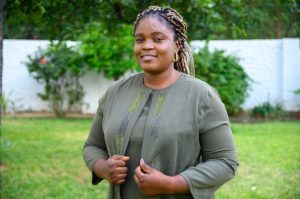
What if a simple photo taken on a mobile phone could save a harvest? That is the challenge taken up by Beninese researcher Mireille Gloria Foumilayo Odounfa, who is using artificial intelligence to help smallholder farmers in her country. A researcher in artificial intelligence and biostatistics, she is developing an AI model to alert farmers to risks threatening their crops and enable them to take action before diseases spread.
At the heart of the Beninese researcher’s work are artificial intelligence models capable of identifying plant diseases from simple photographs. Thanks to this technology, farmers can obtain a rapid diagnosis of the condition of their crops, anticipate risks and better protect their harvests. This innovation could help to strengthen food security on the continent, which is particularly vulnerable to the effects of climate change.
It was through her work with smallholder farmers that she came up with the idea. For several years, Mireille Gloria Foumilayo Odounfa observed the difficulties they faced, notably the loss of their crops due to fungal diseases exacerbated by climate change, without having the tools to detect them at an early stage.
Having worked in the scientific community for many years, this former secondary school maths teacher realised that artificial intelligence could be a game-changer. By cross-referencing weather data, crop images and field observations, these technologies could detect diseases invisible to the human eye and predict their progression before they ravage plantations.
Holding a master’s degree in statistics and probability, she decided to focus her career on research into artificial intelligence for the benefit of farmers. Thanks to a DAAD scholarship, she began a PhD in artificial intelligence and biostatistics at the University of Abomey-Calavi. The aim is to develop machine learning models capable of recognising plant diseases from photographs and alerting farmers to minimise losses.
“The real turning point in my career was realising that statistics alone are not enough to tackle the complexity of today’s challenges. My direct engagement with farming communities as a field researcher since 2022 has helped me understand that my expertise in artificial intelligence should serve a vital cause: food security in Benin in the face of climate change,” she explains to Africa Women Experts.
Beyond basic research, the researcher aims to turn artificial intelligence into a tool that is accessible to farmers. “As an innovator, I make sure these models don’t just stay on a computer. I’m working to make them usable directly on smartphones, even without an internet connection,” she explains to Africa Women Experts.
In practical terms, her work involves photographing infected plants, collecting local weather data linked to these diseases, and noting farmers’ observations, as their on-the-ground experience is a vital source of information. All this data then enables her to feed into the artificial intelligence models she is developing. In turn, these tools are capable of providing early warnings about the risks to which crops are exposed, allowing for rapid intervention.
An innovative AI model for farmers in Africa.
Given that African agriculture is heavily dependent on rainfall, the researcher did not simply develop an AI capable of identifying a disease in a plant. Her innovation goes further. She has designed a model that combines the analysis of images of infected leaves with local weather data. This approach has the advantage not only of diagnosing the disease, but above all of accurately assessing the severity of the lesions on the leaves, taking into account current weather conditions.
One of the key innovations of her model lies in its ability to anticipate developments. By analysing weather data and climate forecasts, the scientist explains, her AI model can simulate the progression of diseases and alert farmers before they spread. The tool thus becomes a genuine early-warning system, capable of helping farmers protect their crops before it is too late.
The researcher is also working on making her model adaptive. Thanks to the capabilities of generative artificial intelligence, it will be able to learn to recognise new, unlisted plant diseases that arise as a result of climate change. Designed to meet the realities on the ground, the app will run directly on a smartphone, without an internet connection. Farmers will therefore be able to use it anywhere, even deep within their plantations.
Designed to address the realities on the ground, the app will run directly on a smartphone, without an internet connection. Farmers will therefore be able to use it anywhere, even deep within their plantations where there is no internet connection. The initial results are promising.
To date, the researcher has already developed the architecture of her artificial intelligence model, and her work has already been published in international journals. From a technical perspective, her model achieves diagnostic accuracy of over 99 per cent for the climate-related diseases she has identified.
Training farmers and promoting inclusive agriculture
For the Beninese researcher, developing artificial intelligence tools is not enough. Farmers must also be able to make them their own. To this end, the researcher is stepping up her training initiatives, as well as raising awareness amongst local communities.
On the ground, she supports producers in getting to grips with these new digital tools. She also raises their awareness of the risks associated with climate change and the adoption of more resilient farming practices. In partnership with organisations such as Save Our Planet, she trains both farmers and agricultural extension workers.
Beyond teaching people how to use digital applications, these training sessions have one ultimate aim: to demystify artificial intelligence and show that it can meet real-world needs. “My aim is not to be a researcher who is out of touch, but to act as a bridge between technology, NGO initiatives and farmers in order to build sustainable solutions,” she explains.
Her commitment extends beyond scientific research. She also co-founded Nailo Bénin, an organisation working to promote social development through technology. The organisation operates across several areas: education, leadership for girls and the economic empowerment of women, with the aim of promoting inclusive agriculture.
For the researcher, technological innovation should not be the preserve of large-scale farms. “Inclusive agriculture is agriculture where technological innovation is not reserved for large industrial farms, but is accessible to small-scale farmers, particularly women,” she explains.
In Africa, women carry out the bulk of agricultural work, yet they remain less well-informed and supported. By providing them with user-friendly artificial intelligence tools accessible via smartphone, the researcher aims to reduce these inequalities. AI can thus become a genuine driver of women’s economic empowerment, giving them immediate access to high-quality agricultural advice via a mobile phone.
AI developed by Africans, for Africa
Developing her artificial intelligence model has not been plain sailing. Right from the start of her research, the researcher came up against a major obstacle: the lack of global data on agricultural diseases that took into account the specific climatic conditions in Benin.
Rather than seeing this as a limitation, she chose to go out into the field to build her own database, using advanced mathematical techniques. Collecting the data also required significant community engagement to gain the trust of smallholder farmers. Added to these challenges was that of funding, as ‘research into artificial intelligence is costly’, she points out, referring to the difficulties in securing the resources needed to develop her work.
Today, her aim goes beyond the success of her project. Mireille Gloria Foumilayo Odounfa hopes to help build an ecosystem in which artificial intelligence in Africa is developed by Africans and responds to the realities and needs of local communities.
DFE






 Menu
Menu